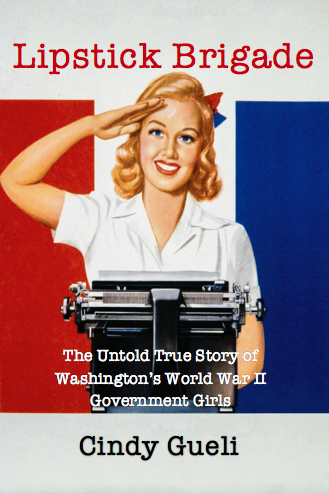
Excerpt: Lipstick Brigade: Women's Adventures in World War II Washington
"There's a new Army on the Potomac- the bright-eyed, fresh-faced young Americans who have poured into Washington from remote farms, sleepy little towns, and the confusion of cities, to work for the government in a time of national emergency."
- Good Housekeeping, January 1942
Government Girl and future Navy WAVE (Women Accepted for Volunteer Emergency Service) Marjory Updegraff hated rainy days. The bus she took on her daily commute to the newly opened but only partly finished Pentagon dropped her off about a quarter of a mile from the building’s entrance. On rain-soaked days, wet umbrellas left their imprint against Updegraff’s freshly pressed suit as she squeezed in among the other 14,000 workers using Capital Transit to get to the Virginia complex. But even worse than damp clothing was the ankle-deep mud clogging the unpaved roads surrounding what would eventually become the largest office building in the world. Updegraff and other wartime Government Girls and servicewomen ruined countless pairs of shoes walking that quarter mile from the bus stop to the Pentagon.
Circumstances did not greatly improve once workers moved inside the building. Updegraff, a civilian ordinance clerk, discovered that her assigned office contained desks but no walls. In fact, the entire floor lacked dividers of any kind. In order to avoid losing women to the cavernous and confusing maze of hallways each time they ventured to the bathroom, Updegraff and her co-workers decided to create a breadcrumb trail of sorts. They tied a rope around their desks, ran it down the hall to the restroom, and attached it to the sinks. Women followed the line back and forth until construction crews finished the interiors of the building. When the Pentagon was completed in 1943, 40,000 workers could shop, bank, eat, get a haircut, or seek medical attention from shops and services lining a massive underground concourse.
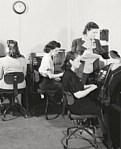
Updegraff worked alongside thousands of other Government Girls and servicewomen, but the Pentagon represented only one of the diverse possible work situations in which women might find themselves. Washington’s female employees staffed offices in private industry, government agencies, and military posts. Newly commissioned government workers arrived in Washington with no indication of what they would find. The work environment, hours, co-workers, and expectations varied from office to office and woman to woman. They were thrown into rigorous, often confusing, and sometimes hazardous work situations in which they were not always welcomed or appreciated. Women’s wartime work in Washington offered progressive employment opportunities because of the number and type of available jobs; however, the day-to-day workplace difficulties, potential dangers, and stress diminished the positive experience for many workers. Yet, Government Girls persevered and provided the federal government with the only feasible solution to its severe wartime labor shortage. Regardless of the hurdles they encountered, women still welcomed the new opportunities available in Washington. Government Girls broke a long tradition of reserving federal jobs for men. Less than a century earlier, the U.S. government employed no women. During World War II, the federal agencies simply could not function without them. As a young Washington stenographer bragged to the New York Times, “Men may have made this war but the women are running it.”

© 2006 |